
Mini Session vs. Full Family Photography Session
Table of Contents
- Mini Session vs. Full Family Photography Session: The Core Differences
- How Long Is a Family Mini Session?
- A Full Family Session: Time, Posing, and Storytelling
- How Many Photos in a Mini Session vs. a Full Session
- What to Wear for Family Photos: Mini and Full Sessions
- Family Photography Session Preparation: Before and After the Shoot
- Which Session Fits Your Family? A Practical Decision Guide
- Frequently Asked Questions
Last Updated: October 5, 2026
Mini Session vs. Full Family Photography Session: The Core Differences
A mini session is a short, scheduled portrait appointment, usually 15 to 30 minutes at a fixed location on a fixed date, while a full family photography session runs 45 to 90 minutes or longer with more flexibility in timing, location, and posing. The core trade-off is simple: a mini session delivers a handful of edited images quickly and affordably, while a full session gives your family room to relax, play, and tell a fuller story. We shoot both formats, and the families who end up happiest are the ones who match the session to their real circumstances rather than to a trend.
Below, we break down session length, image counts, posing, preparation, and total value so you can choose with confidence.
At-a-Glance Comparison
| Factor | Mini Session | Full Family Session |
|---|---|---|
| Typical length | 15-30 minutes | 45-90 minutes |
| Scheduling | Fixed date, limited availability | Flexible, you pick the date |
| Location | One preset spot | Multiple spots or one location, your choice |
| Edited images | Fewer, often a set number | Larger gallery, more variety |
| Posing | Guided, efficient groupings | Relaxed pace with breaks and candid moments |
| Best for | Quick updates, young kids, holiday cards | Storytelling, larger groups, milestone moments |
How Long Is a Family Mini Session?
A family mini session length typically falls between 15 and 30 minutes. Photographers often schedule these back-to-back on a single day, which is why mini sessions tend to run on fixed dates with limited availability. A 20-minute session is common.
That short window shapes everything else. You get a focused set of groupings: the whole family, siblings together, each child alone, and maybe one parent-and-child shot. There is little time for warming up, so mini sessions work best when everyone arrives ready.
Book the earliest slot you can manage if you have young children. Kids tend to be freshest right at the start of a session block, and you avoid the meltdown that builds while waiting.
A Full Family Session: Time, Posing, and Storytelling
A full family session gives you a one-to-two-hour window, and that extra time changes the photographs. Instead of running through a checklist of poses, we let the session breathe. Families walk, laugh, cuddle, and settle into natural interaction, and the best frames often come from the in-between moments rather than the posed ones.
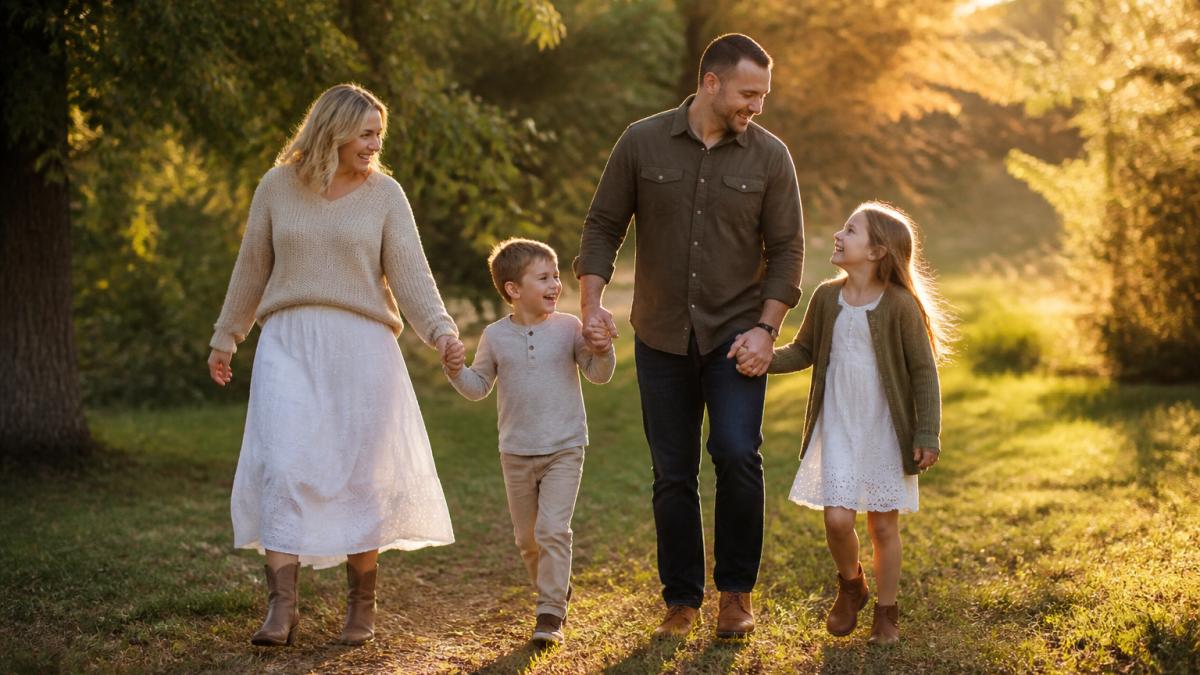
The relaxed pace matters most for children’s attention span. A toddler who melts down at minute ten of a mini session has time to recover in a full session.
How Many Photos in a Mini Session vs. a Full Session
How many photos in a mini session you receive depends on the photographer, but the pattern is consistent: mini sessions include a smaller, set number of edited photos, while full sessions deliver a much larger gallery. A mini session might include a defined package of final images, with the option to purchase more photos from a proofing gallery. A full session usually means dozens of edited images and far more variety to choose from.
The practical difference shows up at photo selection. With a mini session, you are choosing the best of a tight set. With a full session, you are curating from a deep gallery that covers multiple looks, locations, and moods.
Do not assume a mini session gallery will cover every family member individually. With limited time, photographers prioritize group shots. If you want a portrait of each child, book a full session or ask about it before you book.
What to Wear for Family Photos: Mini and Full Sessions
What to wear for family photos comes down to coordination, not matching. Choose two or three colors that work together, then let each person wear something in that palette. Solid tones and simple textures photograph well; busy logos and large patterns compete for attention.
For a mini session, keep it simple. You have one location and a short window, so one cohesive look is enough. For a full session, you can plan a second outfit if you want variety across the gallery. Comfort matters in both cases. If a child is tugging at a stiff collar, that shows in every frame.
Family Photography Session Preparation: Before and After the Shoot
Most comparisons stop at the session itself. The fuller picture is the whole arc: what happens in the weeks before, the day of, and the weeks after. That arc looks different for a mini session than for a full one, and knowing it in advance prevents most of the surprises families run into.
Before the Session
For a mini session, the planning window is short and the details are fixed. You confirm your time slot, the location, and what to wear, and you arrive ready to shoot.
For a full session, the planning is more collaborative. You and your photographer agree on a date, a location (or several), and a general mood for the images. That extra lead time is useful: it gives you room to think about outfits, coordinate with extended family if they are joining, and choose a time of day that fits your children’s rhythms rather than the other way around.
In both cases, a few practical steps help:
- Feed young children beforehand so hunger does not derail the mood.
- Bring water, a snack, and a hairbrush, plus a small bag you can set aside during the shoot.
- Lay out outfits the night before to avoid a morning scramble.
- Keep the palette simple, two or three coordinating colors rather than matching everyone head to toe.
Weather, Illness, and Rescheduling
This is one of the clearest practical differences between the two formats. A mini session is tied to a specific date and location, often as part of a seasonal event with a limited number of slots. If weather turns or a child gets sick, make-up options are usually limited to whatever alternative date the photographer can offer, and sometimes there is none.
A full session is booked around your family, so rescheduling is typically a matter of finding a new date that works for both sides. If you live somewhere with unpredictable weather or you have a child in daycare or school, that flexibility is worth weighing alongside the price difference.
Accessibility and Accommodations
A short, fixed schedule is not a good fit for every family, and it is worth saying so plainly. If a family member uses a wheelchair or mobility aid, needs frequent breaks, is nursing an infant, or has sensory sensitivities or neurodivergence, a 20-minute back-to-back slot can feel rushed or overwhelming. A full session gives you room to pause, regroup, and move at a pace that works.
If you are drawn to a mini session but have access needs, ask the photographer in advance. Questions worth raising:
- Is the location reachable and comfortable for anyone using a mobility aid?
- Can the schedule flex if a child needs a break?
- Is there a quiet spot to step away if someone becomes overstimulated?
- Can a nursing or feeding break be built in without losing the session?
A photographer who has thought about these questions will usually tell you honestly whether a mini session will work or whether a full session is the better call.
After the Shoot: Selection, Editing, and Delivery
Once the session ends, the process is similar in shape but different in scale. Most photographers deliver a proofing gallery, and you choose your included images or any additional ones from there. With a mini session, the gallery is small and the selection is quick. With a full session, you are curating from a much deeper set, which takes longer but gives you more to work with.
Editing and delivery timelines vary by photographer and by season, so ask when you book. Fall is a busy stretch for family portraits, and turnaround times can stretch accordingly. If you need images for holiday cards or framed gifts, work backward from your deadline: order prints and cards as soon as your gallery is ready rather than waiting until the last minute.
The session is one hour of a much longer process. Comparing the two formats on the full arc, planning, weather flexibility, access needs, and delivery, is what separates a good decision from a rushed one.
Which Session Fits Your Family? A Practical Decision Guide
Use your family’s real circumstances to decide, not the price tag alone.
- Choose a mini session if: you have young children with short attention spans, you want a quick update to your family portraits, you need images for holiday cards, or you are working around a tight budget.
- Choose a full session if: you have a larger group, you want a variety of images and locations, you have a child who needs time to warm up, or you are marking a milestone and want a fuller story.
- Consider a mini session first if you have never worked with a photographer and want to see how your family responds in front of a camera.
The total cost and image-value comparison matters here. A mini session has a lower session price, but you may pay extra to purchase more photos. A full session costs more upfront and typically includes a larger gallery. Weigh what you actually want on your wall, not just the booking fee.
Match the session to your family’s temperament, not to the calendar. A calm child in a 20-minute session will out-photograph a restless one in two hours.
Choosing between a mini session and a full family session is really a question of how much room your family needs to be itself in front of a camera. If you want portraits that capture the feeling behind the moment, not just a lineup of smiles, we would love to help. We bring an editorial eye and subtle direction to every session, whether it is a quick mini session or a full afternoon together.
American Society of Media Photographers business resources
Frequently Asked Questions
Are mini photo sessions worth it?
They can be, if your goal is a quick update rather than a full storytelling session. Mini sessions work well for holiday cards, a single framed family portrait, or a milestone that doesn’t need a long shoot. Because they run on fixed dates with limited availability, they’re also easier to schedule around busy fall weekends. If you want variety in posing, multiple locations, or individual portraits of each child, a full session gives you more room to work.
How many pictures do you get in a mini session?
It depends on the photographer, but most mini sessions include a set number of edited digital images rather than the full gallery. Some photographers include around 10 edited photos and offer additional images for purchase. Ask before you book whether you receive a fixed number of final images, how the image gallery is delivered, and what it costs to buy more photos. That answer changes the real value of the session more than the session length does.
How is a mini session different from a full family photography session?
The main differences are session length, number of edited photos, and flexibility. A mini session is short, often 15 to 30 minutes, scheduled on a fixed date at a set location, and includes a smaller set of images. A full family session typically runs one to two hours, allows more posing variety, location choices, outfit changes, and time for children to get comfortable. Full sessions also tend to include more final images and more storytelling.
Can you include the whole family in a mini photo session?
Yes, within limits. Many mini sessions cover a set number of family members, so a larger group may need to check whether everyone fits the session terms. With a short session, the photographer usually prioritizes group portraits and a few candid moments rather than individual portraits of each person. If you want solo shots of each child plus the full group, a full session gives you the time to capture that variety.
When should you book a full family photography session instead of a mini?
Book a full session when you want more than a quick update: a newborn or milestone shoot, extended family, young children who need time to warm up, or a location that matters to you. Full sessions also suit families who want a mix of group portraits, individual portraits, and candid family interaction in one gallery. If you only need one or two good images for cards or gifts, a mini session is usually the simpler choice.

Be the first to comment