
How to Prepare Kids for a Family Mini Session: 7 Steps
Table of Contents
- Step 1: Know How Long a Family Mini Session Lasts
- Step 2: Time the Session Around Nap Schedules and Meals
- Step 3: Choose Outfits and Color Palettes That Won’t Fight You
- Step 4: Pack a Session Bag With Non-Messy Snacks and Comfort Items
- Step 5: Prepare Kids Before the Shoot With Photos and Simple Words
- Step 6: Tips for Stress-Free Family Photos During the Session
- Step 7: How to Get Kids to Smile for Photos Without Forcing It
- Conclusion
- Frequently Asked Questions
Last Updated: September 30, 2026
Step 1: Know How Long a Family Mini Session Lasts
A family mini session is a short, focused photo shoot, usually 15 to 30 minutes, built to capture genuine family moments without the time and cost of a full portrait session. Our fall mini sessions run 20 minutes each.
- Arrive 10 minutes early to settle in
- Expect 8 to 12 usable poses or candid moments
- Plan for one or two reset breaks
- Skip anything that needs a long setup
Step 2: Time the Session Around Nap Schedules and Meals
Timing is the biggest factor in toddler cooperation. Book your family mini session for a window when your child is usually awake, alert, and content, avoiding the hour right before nap or right after waking. Give them a full meal or solid snack about an hour before the shoot, not so close that they feel sluggish, not so far that hunger hits mid-session.
A few timing tips:
- Morning sessions suit early risers
- Late afternoon works for kids who nap after lunch
- Avoid scheduling over a normal meal time
- Build in a 30-minute buffer for traffic or parking
Step 3: Choose Outfits and Color Palettes That Won’t Fight You
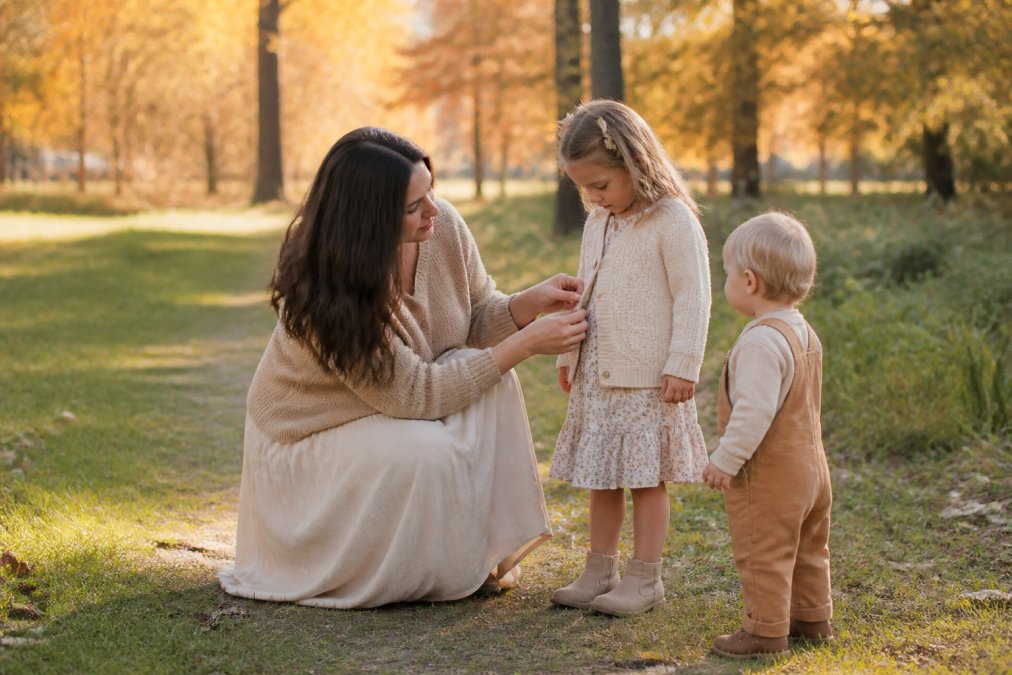
Outfit coordination is where many families overthink things. The goal is simple: clothes that look good together, feel comfortable, and let kids move. Start with a base palette of neutrals like cream, tan, olive, and soft rust, then add one or two accents. Avoid busy florals, logos, and bold stripes, which pull attention from faces. Comfort is non-negotiable, if a child is tugging at a stiff collar or itchy fabric, you will see it in every photo.
- Let kids try outfits on before the day
- Bring one backup outfit per child
- Choose shoes they can walk and play in
- Skip anything brand new and untested
Step 4: Pack a Session Bag With Non-Messy Snacks and Comfort Items
What you pack can rescue a session. Pack non-messy snacks like crackers, pretzels, dry cereal, and fruit pouches, and skip anything with chocolate, sticky frosting, or bright dyes. Bring comfort items too, a favorite stuffed animal, small blanket, or familiar toy can ease nerves, occupy little hands between poses, and even appear in a few candid moments.
Your session bag should include:
- Water bottle with a no-spill lid
- Non-messy snacks in a small container
- One comfort item per child
- Hairbrush and a few hair ties
- Baby wipes for quick cleanups
- A small towel or blanket for sitting
Hand out snacks before the session starts, not during. A child mid-chew rarely gives you a clean, natural smile, and crumbs show up fast on camera.
Step 5: Prepare Kids Before the Shoot With Photos and Simple Words
Kids handle new experiences better when they know what to expect. A few days before the session, show your child a few family photos and point out the smiles, hugs, and funny in-between moments. Talk about the photographer as a friendly person who will take pictures while everyone plays. Use simple, positive words: “We’re going to a park to take some pictures together.” Avoid words like “behave” or “sit still,” which make the whole thing feel like a test.
- Show 3 to 5 happy family photos
- Name the photographer as a friend
- Practice one or two poses at home
- Keep the tone light and fun
Step 6: Tips for Stress-Free Family Photos During the Session
The best family photos happen when parents relax. Kids read your energy, so a calm parent often means a calm child.
During the session:
- Follow the photographer’s lead
- Interact with your kids, not the camera
- Let small imperfections stay
- Keep games and prompts playful
A Step-by-Step Reset Plan for Mid-Session Meltdowns
A meltdown does not ruin a 20-minute session. How you respond in the first 60 seconds decides whether you lose five minutes or the whole shoot. Here is a simple reset sequence:
- Pause the camera. Signal the photographer with a calm hand or a quiet word. Most of us would rather lose 90 seconds than shoot a crying child.
- Change the environment. Move a few steps away from the setup. A different tree, a bench, or a patch of grass resets the scene and the mood.
- Get low and get quiet. Kneel to your child’s eye level and lower your voice instead of raising it. Whispering forces them to lean in and listen.
- Offer a physical reset. A sip of water, a squeeze, or a slow count to five together. Physical input interrupts the spiral faster than words.
- Re-enter through play. Do not restart with “Okay, smile.” Restart with a game: “Race me to that tree,” or “Show me your dinosaur walk.” The photographer can shoot the walk back.
A few things to avoid in the moment:
- Do not apologize repeatedly to the photographer. It signals to your child that something is wrong.
- Do not promise a reward for stopping. It turns the meltdown into a negotiation.
- Do not hand over a phone or tablet as a pacifier. Screens flatten expressions and are hard to pull back from.
Tell your photographer before the session which reset works best for each child. One parent’s “count to five” is another child’s “walk it off.” A 20-second heads-up saves minutes later.
What to Do When Siblings Will Not Cooperate
Sibling friction is the most common stressor parents mention. Two kids who were fine in the car can decide mid-session that they will not stand within three feet of each other. A few approaches that work:
- Split and rejoin. Let the photographer shoot each child individually for a minute, then bring them back together. The break often dissolves the standoff.
- Give them a job. “You are in charge of holding your sister’s hand” turns a demand into a role.
- Use a shared target. “Both of you look at that bird” is easier to comply with than “look at the camera.”
- Let the photographer take the lead. Parents stepping in to referee usually escalates things. Let the prompts come from a neutral adult.
Preparing Sensory-Sensitive Children
If your child is sensitive to textures, sounds, or crowds, tell the photographer ahead of time and share what helps: a quiet space to step away, a favorite comfort item, a heads-up before a flash, or extra time to warm up. A few practical adjustments:
- Clothing: Skip tags, stiff collars, wool, and anything scratchy. Soft knits and cotton layers photograph well and wear comfortably.
- Shoes: Familiar shoes beat new ones. Unfamiliar footwear is a common and overlooked trigger.
- Transitions: Give a two-minute warning before the session starts and before it ends. Sudden changes are harder than expected ones.
- Sensory tools: Chewelry, a small fidget, or noise-reducing headphones can stay in the session bag and come out if needed.
- Exit plan: Agree on a quiet signal your child can use if they need a break. Knowing they can ask for one often means they will not need it.
Do not threaten or bribe your child into cooperating. Promising a reward for “good behavior” can backfire, turning the session into a performance and creating tension that shows in every frame.
A Post-Session Plan That Helps During the Session
One of the most underused preparation tools is deciding in advance how the session ends. Kids cooperate more when they know what comes next, and a low-key celebration gives them something to look forward to without turning the photos into a transaction.
Keep it simple and disconnected from behavior:
- Name the plan out loud before you leave the house. “After pictures, we are getting a treat and going to the playground.”
- Keep the reward small and predictable. A trip to the park, a favorite snack, or a stop for hot cocoa. Not a toy tied to performance.
- Do not use it as leverage. “If you smile, you get ice cream” creates pressure. “After pictures, we get ice cream” creates anticipation.
- Debrief on the way home. Ask what their favorite part was. This builds positive association for next time and gives you a read on what to adjust.
Step 7: How to Get Kids to Smile for Photos Without Forcing It
The fastest way to get a fake smile is to say “say cheese.” The fastest way to get a real one is to make them laugh.
Prompts That Work by Age
A prompt that lands with a four-year-old will fall flat with a nine-year-old. Match the game to the developmental stage:
Toddlers (1 to 3)
- “Where is your nose? Where is Daddy’s nose?”
- “Can you give Mommy a big squeeze?”
- “Show me your stomping feet.”
- Peek-a-boo from behind a parent’s shoulder
Preschoolers (3 to 5)
- “Whisper a secret to Mom.”
- “Show me your silliest dance move.”
- “Can you roar like a dinosaur?”
- “Race to that tree and back.”
Early elementary (6 to 9)
- “Tell Dad a joke and see if he laughs.”
- “Give Mom the biggest hug you have ever given.”
- “Show me your best superhero pose.”
- “What is the funniest thing that happened at school this week?”
Tweens and teens (10+)
- “Walk and talk with Mom like you are on a hike.”
- “Tell me the worst joke you know.”
- “Show me your real laugh, not the camera one.”
What to Do When Nothing Works
Some kids simply will not perform on cue, and that is not a failure. It is a personality. Here is what to do instead of pushing:
- Stop asking for a smile. The more you ask, the more they resist. Let the photographer work around them.
- Shoot the real expression. A thoughtful, serious, or curious face is still a beautiful photo. Some of the most treasured family images show a child watching a leaf fall, not grinning at a lens.
- Let them lead. Ask what they want to do next. “Should we take a picture by the tree or on the bench?” gives them control without giving up the shoot.
- Use the reset plan. If a child is done, take the 90-second break described above. Pushing through rarely produces usable frames.
- Accept the off day. A 20-minute session is short enough that one uncooperative child does not ruin the set. The photographer can focus on the rest of the family and circle back.
A Note on Bribes and Threats
It is tempting to promise ice cream for a smile or threaten to leave if they do not cooperate. Both backfire. Bribes turn the session into a transaction, and threats create tension that shows in every frame. The post-session celebration described earlier works because it is expected and unconditional, not earned.
Conclusion
Preparing kids for a family mini session comes down to a few simple things: good timing, comfortable clothes, the right snacks, and a relaxed parent. When you plan around naps, meals, and your child’s personality, the session feels less like a chore and more like a fun family outing.
Frequently Asked Questions
How long should a family mini session last?
Most family mini sessions run about 20 minutes, and that short window is intentional. Young children often lose focus after 15 to 20 minutes, so a tight timeline keeps energy high and produces more genuine expressions than a longer shoot. Knowing the session is brief also lowers pressure on parents, which kids pick up on. Ask your photographer for the exact length before you book so you can plan naps and snacks around it.
What should I tell my kids before a professional photo session?
Keep it simple and positive. Tell them you are going to a nice outdoor spot to play together while someone takes pictures. Avoid phrases like ‘be good’ or ‘smile nicely,’ which can make kids tense. Show them one or two sample photos from your photographer’s website so they know what to expect, and let them pick one small comfort item to bring along. Treating it as a family outing rather than a performance works better for everyone.
What are the best snacks to bring to a family mini session?
Choose non-messy snacks that won’t stain mouths or outfits: plain crackers, dry cereal, apple slices, or cheese sticks. Avoid chocolate, berries, and anything with bright food coloring. Bring water in a spill-proof cup rather than juice. Save the snacks for after the session as a small reward, or offer them during a mid-session break if a toddler needs a reset. Pack everything in a bag you can set aside so it stays out of the frame.
How do I keep toddlers happy during a 20-minute photo shoot?
Work with your photographer’s playful prompts instead of directing your child yourself. Quick games, songs, and gentle movement like swinging or walking together hold a toddler’s attention far longer than asking them to sit and smile. Bring a comfort item, keep the pace moving, and accept that the best candid moments often happen between poses. If a meltdown starts, step back and let the photographer follow your child’s lead rather than forcing the original plan.

Be the first to comment