Last Updated: October 28, 2026
Quick Summary
The best portrait photography for special needs children lets the child set the pace, using soft direction instead of rigid posing. Preparation matters too, so families and photographers should agree on signs of stress, a calming signal, and a plan for ending the session early if needed.
- Look for variety in expression and posture in a photographer’s portfolio, not just polished smiles.
- Avoid stiff poses so the child stays relaxed and shows more personality.
- Talk with the family about signs of stress and what helps the child calm down before the session.
- Agree on a clear signal for when a break is needed.
- Keep the session short and flexible, and plan breaks into the timeline.
Table of Contents
- Why Portrait Photography for Special Needs Children Takes a Different Approach
- What to Look for in a Photographer for Special Needs Children
- Photography Tips for Children with Special Needs
- Preparing a Child with Special Needs for a Photo Session
- Planning a Sensory-Friendly Photography Session
- Family Photos with a Child with Special Needs: Following the Child’s Lead
- Booking Your Family Portrait Session with KRISTIE Montrois
- Frequently Asked Questions
Why Portrait Photography for Special Needs Children Takes a Different Approach
Portrait photography for special needs children starts with a simple idea: the child sets the pace. Our complete guide to photographing children with special needs walks through the reasons behind this approach. At KRISTIE Montrois, we approach family portraiture with softness and subtle direction rather than rigid posing.
Our goal is to document the feeling behind fleeting moments.
What to Look for in a Photographer for Special Needs Children
A structured evaluation can help you move past marketing language and ask the right questions.
Start with the portfolio, but look differently than you would for a standard family session. Instead of scanning for the most polished smiles, look for variety in expression and posture. Do the children look relaxed, or do many images show the same stiff pose? Are there candid moments, a child looking away, a parent’s hand on a shoulder, a sibling mid-laugh, or only directed group shots?
Photography Tips for Children with Special Needs
Avoid stiff poses. Our guide to avoiding stiff poses in portrait photography explains how to keep children relaxed and natural in photos. A child who is relaxed and engaged will show more personality than one who is trying to follow complex instructions.
Preparing a Child with Special Needs for a Photo Session
Talk with the family about signs of stress and what helps calm the child. Agree on a signal for when a break is needed. Keep a plan for ending the session early if it is not going well, and let the family know that is a normal part of the process.
Preparation tends to go more smoothly when the family and photographer plan a few key details together before the session begins.
| Step | What to do | Timing |
|---|---|---|
| Talk with the family | Discuss signs of stress and what helps the child calm down | Before the session |
| Agree on a signal | Set a clear cue for when a break is needed | Before the session |
| Plan an early end | Keep a plan for ending the session if it is not going well | Before the session |
| Explain the process | Let the family know that stopping early is normal | Before the session |
Planning a Sensory-Friendly Photography Session
Start with a visual schedule.
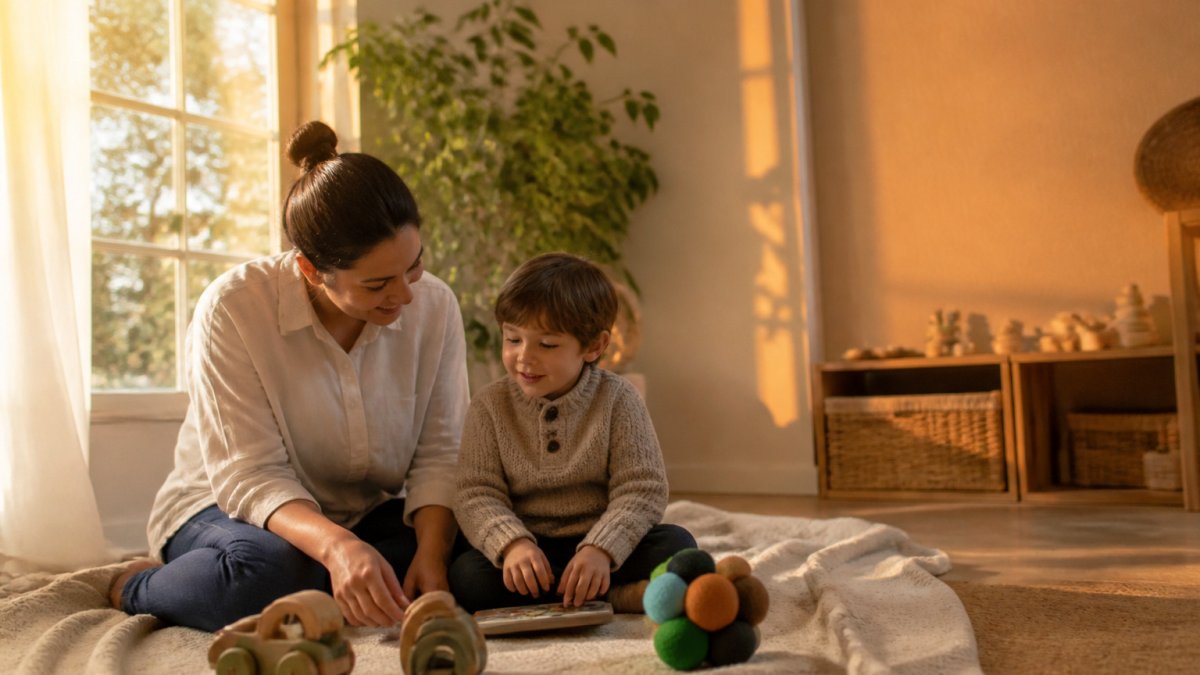
Identify a quiet space in advance.
Plan breaks into the timeline.
Bring familiar objects.
Communicate about sensory details before the session.
Agree on a signal for overwhelm.
Keep the session short and flexible.
Family Photos with a Child with Special Needs: Following the Child’s Lead
Some families worry that a relaxed approach will not produce polished portraits. In practice, a patient photographer can still create timeless, well-composed images while letting the child set the rhythm. If your child won’t cooperate during family photos, this guide on what to do offers practical next steps. The result is a set of pictures that feel true to the family.
Booking Your Family Portrait Session with KRISTIE Montrois
If you are looking for family portraits, we would love to talk through your family’s goals.
Explore our family portrait services to see how we work with families. For more on our editorial work, visit our editorial portraits page.
Frequently Asked Questions
How do I choose a photographer for a child with special needs?
Start by asking whether the photographer has worked with children with disabilities, autism, or sensory needs before. Look at their portfolio for relaxed, candid images rather than rigid poses.
What should I tell a photographer before a portrait session?
Share your child’s communication style, known triggers, favorite things, and what tends to help them settle. Mention sensory sensitivities such as loud sounds, bright lights, certain textures, or being touched, and note any mobility needs or equipment your child uses. Let the photographer know how long your child can comfortably stay engaged and what signs indicate they need a break.
How can you make a photo session more comfortable for an autistic child?
Keep the environment predictable and low in sensory input, with soft light, minimal background noise, and a clear start and end. Share a visual schedule or a simple description of what will happen so your child knows what to expect. Allow your child to move around, use a favorite object, or photograph from a distance rather than insisting on eye contact or posed smiles. Short sessions with planned breaks often produce more natural, relaxed images than long, demanding ones.
What should a child wear for a sensory-friendly photo session?
Choose clothing your child already wears comfortably, made from soft fabrics without rough tags, tight waistbands, or scratchy seams. Avoid anything new that has not been tested at home, since unfamiliar textures can cause distress during the shoot. Solid colors or familiar patterns often photograph well and keep the focus on your child’s expression. Bring a spare outfit in case clothing becomes uncomfortable partway through.
How long should a portrait session for a child with special needs last?
There is no single correct length, because it depends on your child’s stamina, attention span, and sensory tolerance. Many families find that a shorter session of 20 to 30 minutes, with a break partway through, works better than a long block of time. Plan around your child’s most regulated part of the day and leave room to stop early if needed. A good photographer will build the session around your child rather than a fixed schedule.
Can a photographer accommodate breaks or movement during a session?
Most photographers who work with children with special needs expect to pause, reset, or change plans during a shoot. Confirm this in advance and ask how they prefer to signal a break so your child is not startled. Movement is often welcome, since candid, in-the-moment images of a child moving freely can be more meaningful than static poses. Discuss your options before the session so everyone knows the plan.


0
comments
Leave a comment ⟶