Table of Contents
- What Professional Portrait Photography Actually Delivers
- Portrait Photography vs Headshots: What’s the Difference?
- The Real ROI: Where Professional Portraits Pay You Back
- How to Prepare for a Portrait Photoshoot
- The DIY Comparison: Why Gear and Editing Matter
- Common Misconceptions About Hiring a Photographer
- When Professional Portrait Photography Is Worth It (and When It Isn’t)
- Frequently Asked Questions
Last Updated: October 20, 2026
What Professional Portrait Photography Actually Delivers
Professional portrait photography is a planned, directed, and edited portrait session built around one person or one family, not a quick snapshot. This guide from KRISTIE Montrois breaks down where the value comes from and when the spend makes sense.
A phone camera records what is in front of it. A portrait session shapes it. The difference is craft, direction, and post-production, and that difference is what you are actually paying for.
Beyond the Snapshot: Craft, Direction, and Post-Production
Three things separate a portrait from a snapshot:
- Craft: light is shaped, not just found. Softboxes, reflectors, and careful positioning do the work.
- Direction: small adjustments to posture, hands, and gaze change everything. Good photographers guide without stiff posing.
- Post-production: color correction, retouching, and consistency across a full set of images.
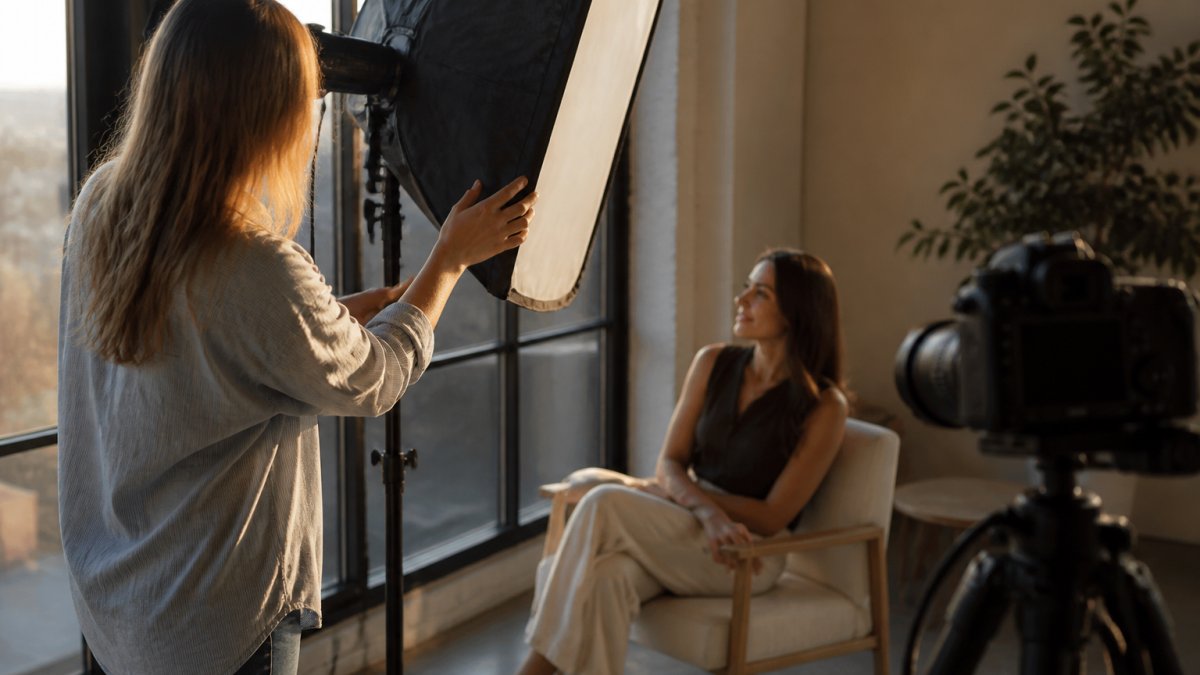
Most people underestimate the third one. The edit is where a set of images starts to feel like a body of work instead of a folder of files.
Portrait Photography vs Headshots: What’s the Difference?
A headshot is a tight, functional crop of the face, usually for a resume or work profile. Portrait photography is broader: full sessions, multiple looks, and images built to tell a story.
| Feature | Headshot | Portrait Session |
|---|---|---|
| Framing | Face and shoulders | Full or three-quarter body |
| Purpose | Identification | Storytelling, personal branding |
| Length | Minutes | A planned session |
| Deliverables | One or two images | A full edited set |
| Styling | Minimal | Wardrobe, location, mood |
Neither is better. They answer different questions. A headshot says “this is me.” A portrait says “this is who I am.”
The Real ROI: Where Professional Portraits Pay You Back
Return on a portrait session is rarely a single number. It shows up as a pattern across the places your image and your family’s image appear, and it compounds over years rather than weeks. Here is how that return actually works, broken down by use case.
Career Advancement and Personal Branding
A strong professional image does quiet work over time. It appears on LinkedIn, in speaker bios, on company pages, in press features, and in internal directories. When those surfaces show the same intentional, current portrait, recognition builds, and recognition builds trust before you ever speak.
Personal branding depends on visual identity. When your portraits look intentional, people tend to assume the work behind them is intentional too.
Industry-Specific Framing
The return looks different depending on what you do. A few patterns worth knowing:
- Client-facing and sales roles: a current, consistent portrait on profiles, proposals, and email signatures reduces the friction of a first impression. The return shows up as warmer replies and shorter trust-building.
- Real estate and local services: portraits on listings, team pages, and review profiles make an unfamiliar business feel like a known person. The return shows up as more inbound inquiries from people who already feel they know who they are contacting.
- Creative and freelance work: a portrait set doubles as portfolio material and press-kit material. The return shows up as fewer requests for “a good photo of you” and more usable assets on hand.
- Corporate and internal roles: a consistent portrait across the company directory and internal tools signals stability. The return is quieter but real, especially for people who present or are quoted externally.
These are patterns, not guarantees. The common thread is that the portrait is reused across many surfaces, and the value comes from that reuse.
Dating Profiles and Social Media Presence
Dating profiles and social feeds reward the same thing: a clear, warm, current photo of a real person. Blurry group shots and old selfies do not communicate much.
The same logic applies to family portraits. Updated images become holiday cards, framed gifts for grandparents, and the record of a year that will not come around again. The return there is not financial, but it is the kind people actually remember.
The Cost-Benefit Frame
The honest way to weigh a session is to compare it against what you would otherwise spend, in money, time, and missed use. A DIY attempt costs little up front but often costs a second attempt later, plus the hours of editing most people do not enjoy. A directed session costs more up front and delivers a finished, consistent set you can use immediately across profiles, cards, prints, and gifts.
The return on portraits is rarely a single booking or a single post. It compounds across every place your face and your family appear, and the more places that is, the more the session pays for itself.
How to Prepare for a Portrait Photoshoot
Preparation is the cheapest upgrade available. Knowing how to prepare for a portrait photoshoot removes most of the stress before you arrive.
- Choose wardrobe two weeks out. Bring two or three options and avoid busy patterns.
- Think about location. Studio light and environmental settings tell different stories.
- Sleep and hydrate. Skin shows it, and no edit fully hides it.
- Bring references. Share images you love and images you do not.
- Arrive early and settle in. Rushed clients look rushed.
- Skip the spray tan and the new haircut. Both are hard to fix later.
A common mistake is treating wardrobe as an afterthought. It is half the image.
The DIY Comparison: Why Gear and Editing Matter
Most articles on this topic stay persuasive. This section gets technical, because the honest answer to “is it worth it” depends on what a phone physically cannot do compared with a dedicated camera and a trained editor.
The Gear Gap, Side by Side
| Factor | Smartphone | Dedicated portrait camera |
|---|---|---|
| Sensor size | Small sensor, roughly the size of a fingernail | Full-frame or APS-C sensor, many times larger |
| Lens | Fixed wide-angle, digital zoom | Interchangeable portrait lens, typically 85mm or 50mm |
| Light control | Ambient only, plus a small on-board flash | Off-camera strobes, softboxes, reflectors, gels |
| Depth of field | Computed in software, often uneven at edges | Optical, smooth, and repeatable |
| File format | Compressed JPEG or HEIC | RAW, with far more latitude in editing |
| Consistency across a set | Varies with light and distance | Controlled and repeatable |
A larger sensor captures more light and more tonal information, which is why a dedicated camera holds detail in shadows and highlights that a phone clips. A portrait-length lens compresses facial features the way the eye expects; a phone’s wide lens stretches them at close range, which is why selfies often look slightly off.
What Post-Production Actually Adds
This is the part most DIY comparisons skip, and it is where a large share of the professional value sits.
- Color correction: white balance, skin tones, and overall color are matched across every image in the set so the gallery feels like one body of work.
- Retouching: blemishes, stray hairs, and temporary marks are removed while skin texture is preserved. Good retouching is invisible; bad retouching is the reason people say they “look fake.”
- Dodging and burning: local light and shadow are shaped to guide the eye to the face and away from distractions.
- Cropping and consistency: each image is cropped to a usable ratio for profiles, prints, and cards, and the full set is graded to match.
- Culling: a photographer shoots many frames and delivers the strongest ones, which is why a session yields a tight edited set rather than hundreds of near-duplicates.
A phone filter applies one global look to the whole frame. Professional editing is selective, image by image, and that is the difference between a folder of files and a finished set.
Where DIY Genuinely Wins
DIY wins on volume, speed, and cost of entry. For a quick profile refresh, a phone in good window light is fine. For images that need to last years, match across platforms, and hold up in print, the gap between a phone snapshot and a directed, edited portrait is wide, and it is a gap of craft and post-production, not just megapixels.
If you want to test a DIY setup first, shoot near a large window at the same time of day twice, one week apart. Compare the two sets side by side. The difference in color, skin tone, and consistency will tell you more about the value of a directed session than any gear list.
Common Misconceptions About Hiring a Photographer
The biggest misconception is that a session means rigid, uncomfortable posing. It does not. Subtle direction exists precisely so the images feel natural.
Other myths worth retiring:
- “It takes all day.” Sessions can be short and still produce a full set of images.
- “I need to lose weight first.” Good direction and framing work with you now, not later.
- “Editing makes people look fake.” Good retouching is invisible. Bad retouching is not.
- “It is only for weddings.” Portraits cover career, family, and personal milestones.
- “I am not photogenic.” Almost nobody is. Most people have simply never been directed.
The last one is the most common objection we hear, and the least true.
When Professional Portrait Photography Is Worth It (and When It Isn’t)
Is professional portrait photography worth it? It is worth it when the images need to last, represent you or your family accurately, and appear in more than one place. It is not worth it for a throwaway photo you will replace in a month.
Book a session if:
- You need a consistent set of images across work and social profiles.
- Your family has changed since the last portrait.
- You want images for holiday cards or gifts.
- You are building a personal brand or a public-facing role.
Skip it if:
- You need one casual photo for a single form.
- You are mid-transition and want to wait for a milestone.
- You have no use for a full edited set.
For families, sessions can be kept short and relaxed. Our family portraits are built around connection and movement, not long posing. Women looking for personal work can explore women’s portraits, and editorial clients can see editorial portraits and published work.
The most expensive mistake is booking a session with no plan for the images. Decide where they will live, work profile, family wall, holiday card, before you book. Otherwise the files sit unused.
Frequently Asked Questions
What are the benefits of hiring a professional portrait photographer?
A professional photographer brings lighting knowledge, posing direction, and post-production editing that most people cannot replicate at home. They create images with consistent quality and a polished look that builds trust in your personal brand. The session itself is guided, so you are not left guessing how to stand or where to look. The result is a set of images you can use across LinkedIn, social media, dating profiles, and family keepsakes for years.
Is there a difference between a headshot and a portrait?
Yes. A headshot is tightly framed on the face and shoulders, usually for professional profiles and casting. A portrait is broader in scope and can include environmental context, artistic styling, and storytelling elements. Portrait photography often involves a full session with multiple looks, while headshots are typically shorter and more standardized. Knowing which one you need helps you choose the right photographer and prepare accordingly.
How do I know if I am ready for a professional portrait session?
You are ready when you have a clear use for the images, whether that is a career move, a rebrand, or a family milestone. Preparation matters more than perfection. Think about your wardrobe, the locations that fit your story, and the feeling you want the photos to convey. A good photographer will guide you through the rest, including how to prepare for a portrait photoshoot so the session feels calm and productive.
What should I look for when choosing a portrait photographer?
Look at their full portfolio, not just a few highlights, to see if their style matches what you want. Ask how they direct clients and whether they offer retouching. Check whether they work with your specific needs, such as families with special needs children or editorial branding. A conversation before booking helps confirm they understand your vision and can deliver images that feel authentic to you.
Portraits are an investment in how you and your family are remembered, and the value depends on what you do with them. If you want images that feel like you rather than a posed version of you, we can help. KRISTIE Montrois brings editorial craft, subtle direction, and careful post-production to every session, from fashion campaigns to family milestones. View the portfolio and see the difference for yourself. View Portfolio ->

0
comments
Leave a comment ⟶